
Armor-Piercing Shell
By Iron Nest Wiki Team · August 2026 · 8 min read
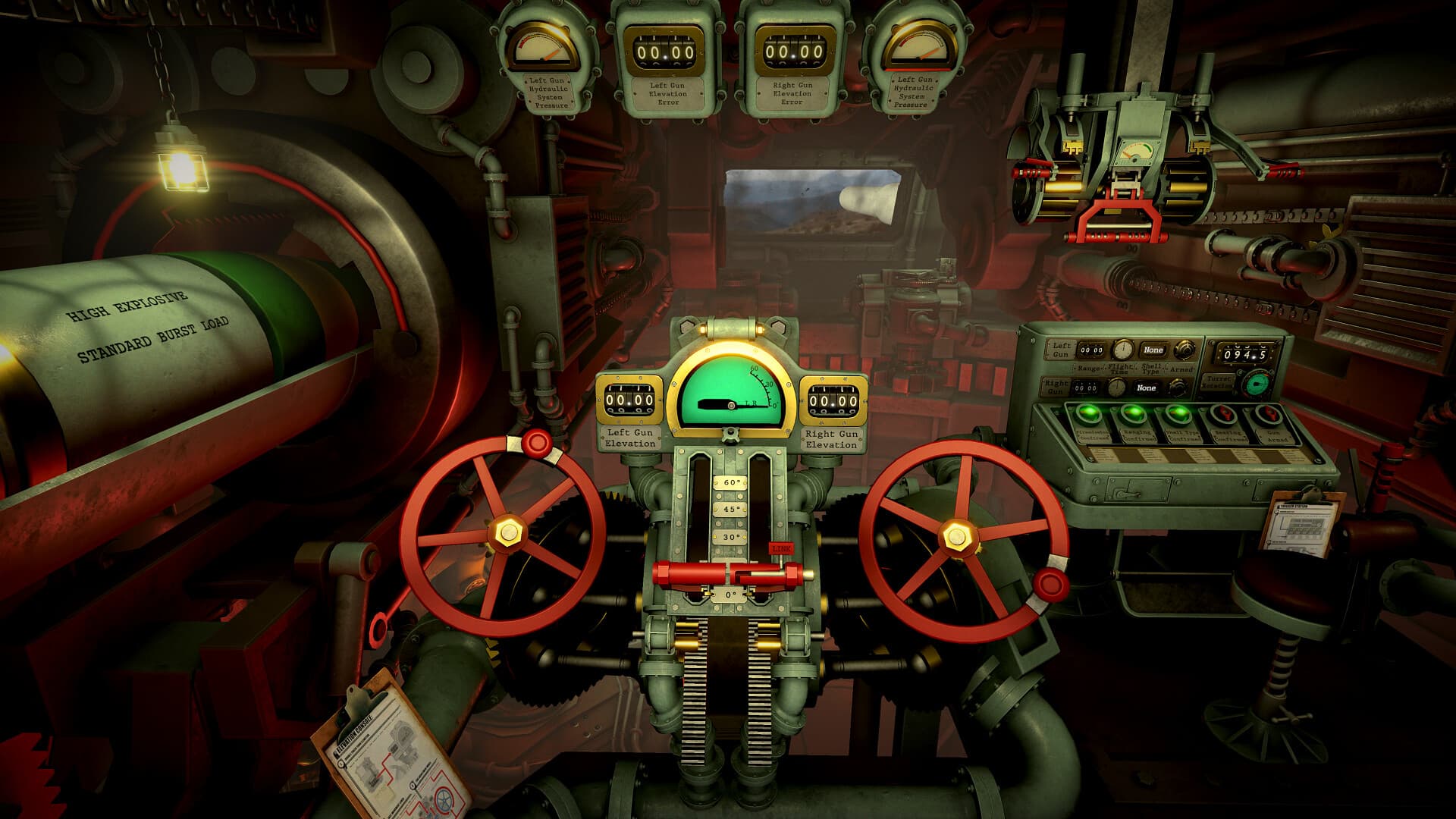
The Armor-Piercing Shell (AP) is one of the most tactically significant munitions in the IRON NEST arsenal. Designed for concentrated penetration against hardened targets, AP rounds trade splash damage for surgical precision and structural breaching capability. Unlike High-Explosive shells that blanket an area with fragmentation and overpressure, the AP round focuses all kinetic energy into a narrow channel, punching through reinforced concrete, steel plating, and layered armor that would shrug off conventional explosive impacts.
IRON NEST officially confirms the existence and behavior of AP ammunition through the firing-card system visible in the Ballistic Calculator. The AP task card is selectable, displays charge-specific elevation data, and integrates with the full six-step firing cycle. This places AP firmly in the “Confirmed” evidence tier — the shell exists, its mechanics are observable, and its tactical role is well-documented by the community. However, certain edge-case penetration scenarios, such as multi-layer concrete sandwich structures or angled armor above 60 degrees, remain subject to community testing rather than official documentation.
For operators transitioning from High-Explosive spam to precision artillery, AP represents a paradigm shift. The margin for error collapses from meters to centimeters. A near-miss with HE still inflicts damage through splash; a near-miss with AP inflicts nothing. This guide covers every confirmed aspect of AP behavior, from blast radius interpretation to charge selection, target matching, and the disciplined mindset required to wield armor-piercing ammunition effectively.
Specifications
Tactics & Usage
Reserve AP for Hardened Targets Only
The cardinal rule of armor-piercing ammunition is conservation. AP shells are not general-purpose rounds, and treating them as such drains requisition points while delivering suboptimal results. Never waste AP on soft targets — infantry in the open, wooden structures, light vehicles, or unfortified positions — where a standard High-Explosive shell would deliver equal or superior results at lower cost and with greater forgiveness for elevation error.
The 5-meter blast radius of AP is deceptive. It does not describe an area-of-effect damage zone in the traditional sense. Instead, it represents the concentrated penetration footprint: the physical channel through which the shell breaches the target. A direct hit on a bunker wall triggers the penetration sequence. A miss by even two meters results in zero damage, because the round embeds in earth or detonates harmlessly against the outer surface without achieving the structural breach. This is fundamentally different from HE, where a 5-meter miss still inflicts partial splash damage.
Precision Aim Is Non-Negotiable
Because AP requires direct impact, precision aim using the traverse and elevation handwheels becomes absolutely mandatory. Experienced operators develop a pre-fire checklist specifically for AP shots: confirm target classification reads “fortified” or “armored,” verify the Ballistic Calculator output against the current shell card, double-check that the physical breech contains AP and not HE, and only then commit to the firing sequence. Rushing any of these steps turns a precision tool into an expensive paperweight.
The traverse handwheel controls azimuth; the elevation handwheel controls the vertical angle. Both must be set to the exact values displayed by the calculator. A one-degree elevation error at 6,000 meters translates to roughly 100 meters of impact deviation — well outside the AP penetration window. Operators who rely on “eyeballing” the target through the sighting reticle, rather than trusting the calculator and handwheel scales, will miss consistently with AP.
Charge Selection for Maximum Penetration
AP shells benefit from higher powder charges in a way that HE does not. While HE relies on blast radius to forgive range errors, AP relies on impact velocity to achieve penetration depth. Community testing suggests that charge 4 or 5 delivers optimal penetration against standard fortified targets, while charge 6 may be warranted for extreme-range armored vehicles or multi-layer concrete structures. Charge 3 and below underperform against hardened targets, not because the shell misses, but because impact velocity drops below the threshold required to initiate the penetration sequence.
When facing a mission with mixed target types — some fortified, some soft — the disciplined approach is to load AP in one barrel and HE in the other. Fire AP at the hardened target first, then rotate the turret and fire HE at the soft target without reloading. This dual-gun rhythm, described in the Tips & Tricks guide, maximizes ammunition efficiency while minimizing the reload cycle penalty.
Target Prioritization in Multi-Objective Missions
In campaign missions where the Teleprinter spits multiple objectives in rapid succession, AP targets should be prioritized based on threat level and structural hardness. Enemy Fire Direction Centers (FDCs) housed in reinforced bunkers are prime AP targets, because destroying them temporarily halts counter-battery fire. Armored trains, which appear during the “Iron Crossing” mission, also demand AP — though community reports note that standard AP occasionally deflects off sloped train plating, suggesting APCR (Armor-Piercing Composite Rigid) may be preferable when available.
Underground targets present a unique AP use case. The shell penetrates the surface layer before detonating, making it effective against subterranean bunkers and tunnel mouths where HE would merely collapse the entrance without reaching the interior. However, the exact depth penetration remains unverified — community estimates range from 3 to 8 meters of packed earth, depending on charge and soil type.
Evidence Status
Confirmed — Official Firing Card Exists
The AP shell type is selectable in the Ballistic Calculator, displays charge-specific elevation data, and appears in the official ammunition task cards. Its existence, basic behavior, and integration with the firing cycle are confirmed by in-game imagery. However, the following aspects remain subject to community verification:
- Exact penetration depth against multi-layer concrete sandwich structures
- Deflection behavior against angled armor above 60 degrees
- Performance against subterranean targets beyond 5 meters of packed earth
- Interaction with the “Iron Crossing” armored train sloped plating
Related Guides
- Best Shells Tier List — Compare AP against HE, HCHE, chemical, and incendiary rounds
- Ballistic Calculator Guide — Master the calculator for precision AP firing solutions
- Tips and Tricks — Advanced dual-gun rhythm and loading discipline for AP operators
- High-Explosive Shell (HCHE) — The soft-target counterpart to AP; know when to switch
Frequently Asked Questions
What happens if AP misses the target?
Unlike High-Explosive shells, AP deals zero splash damage on a miss. The round either embeds in the ground, detonates against the target surface without penetrating, or passes through empty space. There is no partial damage. This is why precision aim is mandatory — a miss is a complete waste of a requisition point.
Should I use AP against armored trains?
Standard AP works against armored trains, but community reports suggest occasional deflections off sloped plating. If APCR (Armor-Piercing Composite Rigid) is available, it is the superior choice for the “Iron Crossing” mission. If only standard AP is unlocked, aim for flat surfaces — the train hull rather than the angled turret mantlet — and use charge 5 for maximum impact velocity.
How does AP compare to HE against bunkers?
HE damages the bunker exterior and suppresses occupants through overpressure, but rarely destroys the structure in one hit. AP penetrates the wall and detonates inside, achieving structural kill with a single well-placed round. Against reinforced concrete bunkers, AP is the definitive choice. Against wooden or earthen bunkers, HE is more cost-effective.
What charge should I use for AP?
Charge 4 is the baseline for standard fortified targets within 8 km. Charge 5 increases penetration depth and is recommended for armored vehicles, multi-layer concrete, or targets beyond 8 km. Charge 6 is reserved for extreme-range precision shots or heavily angled armor. Charges 1-3 underperform against hardened targets due to insufficient impact velocity.